
Disc vs Rotor WPC Pulverizer Machine: Which One to Choose?
Updated: Aug 31
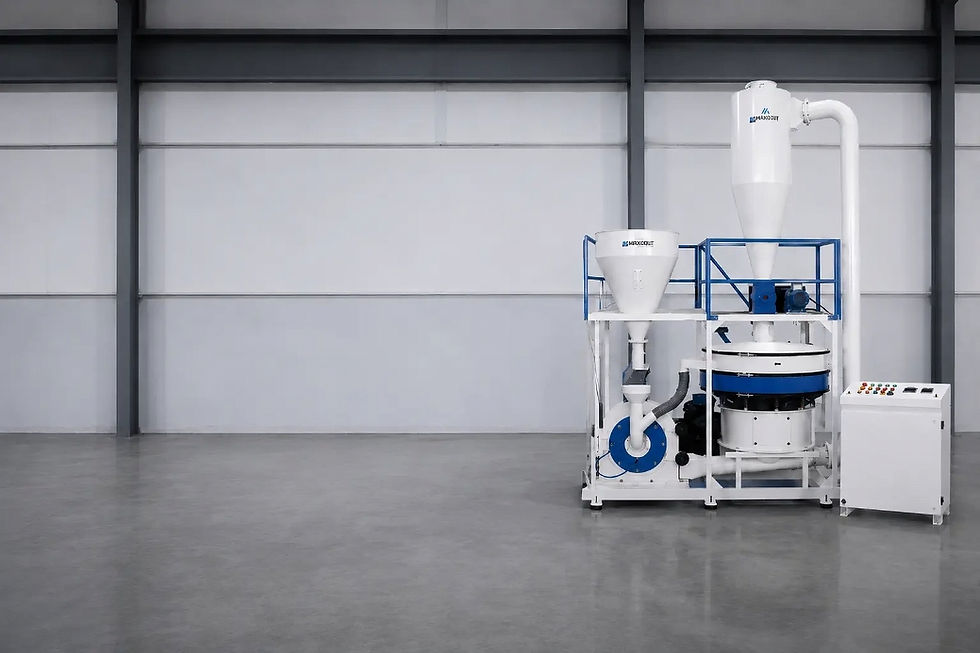
WPC is a bit of an odd one to grind compared to everything else on this list. You're not just breaking down a plastic, you're breaking down plastic and wood fiber at the same time, and those two materials don't respond to grinding forces the same way. That's really the whole story behind why rotor hammer machines dominate this application.
Why Rotor Hammer Is the Default for WPC
Picture what's actually inside a WPC compound, wood flour or natural fiber bound up with PVC or another polymer resin. A disc pulverizer relies on shearing material through a controlled gap, which works beautifully on a uniform plastic. Wood fiber doesn't shear the same way plastic does, though. It tends to fray or resist rather than cut cleanly.
Rotor hammer machines solve this through impact. The hammers strike the material repeatedly, breaking down both the fiber and the polymer components together rather than trying to shear them uniformly. It's a rougher process, but it's effective on a composite material that a disc setup would struggle with.
When Disc Grinding Still Makes Sense
It's not an absolute rule. Some WPC formulations run lower wood fiber content, closer to a standard filled plastic than a true wood composite, and those can sometimes be processed on disc equipment without much trouble. If your formulation leans heavily toward the polymer side, it's worth asking your machine supplier whether disc type would actually work for your specific mix.
For most WPC producers, though, door manufacturers, board makers, furniture profile lines, the fiber content is high enough that rotor hammer remains the practical choice.
The Heat Problem Nobody Talks About Enough
Here's something that trips people up: wood fiber scorches. Not melts, scorches, like burning. If your pulverizer runs hot, you'll start seeing discoloration and a drop in strength in your finished boards, and it's not always obvious until you're looking at a batch of rejected product.
This is where cooling system quality actually matters more for WPC than it does for straight plastics. A machine with weak air or water cooling will run hotter under impact grinding, and that heat goes straight into your wood fiber content. It's worth asking pointed questions about cooling capacity before you buy, not just motor power and output figures.
Blade Wear Is a Real Cost Here Too
Wood fiber is abrasive, more so than you'd expect. Hammer blades take a beating grinding WPC continuously, and cheaper blade materials wear down faster than most buyers anticipate. Factor blade replacement into your running costs from day one rather than being surprised by it six months in.
What Maxoout Builds for WPC
Our WPC machines are rotor hammer type by default, built with wear-resistant hammer blades designed to hold up against fiber abrasion, plus dual air and water cooling sized to keep temperatures under control during continuous runs. If your formulation is unusual, low fiber content, mixed materials, something outside the typical range, talk to us before you order. We'd rather match the machine to your actual compound than sell you a standard configuration that fights your material.
Product Specification
MP 300 comes with a 15 kW motor and output of 120-200 kg/hr. MP 400 runs at 30 kW for 200-300 kg/hr. MP 600 tops our range at 55 kW, handling 400-600 kg/hr.
Frequently Asked Questions
Q: Why does WPC need a rotor hammer pulverizer instead of disc type?
WPC combines wood fiber with polymer resin, and impact grinding handles that mixed composition more effectively than disc shearing, which works better on uniform plastics.
Q: Can disc type machines ever process WPC?
Sometimes, for formulations with lower wood fiber content that behave more like a standard filled plastic. It depends on your specific compound, worth discussing with your supplier rather than assuming either way.
Q: Why is cooling so important for WPC grinding?
Excessive heat can scorch the wood fiber content, causing discoloration and reduced strength in the finished product. Good cooling protects against this during continuous grinding.
Q: Does WPC wear out grinding equipment faster than plastic alone?
Yes, wood fiber is more abrasive than most people expect. Hammer blades wear faster under WPC than they would grinding pure plastic, so blade quality and replacement cost are worth factoring into your decision.
Q: What capacity WPC pulverizer should I buy?
Our range runs from 120 kg/hr up to 600 kg/hr. Tell us your wood fiber ratio and production target and we'll help size it correctly.
Have questions about your specific WPC formulation? Call Maxoout Industries at +91 96015 11170 or get in touch here and we'll talk through what actually fits.


Comments